The Master of Deception: Unveiling the Fascinating and Ruthless Biology of Cuckoo Chicks
Nature’s Most Notorious Impostors Cuckoos (genus Cuculus) are renowned across the avian world for a cunning and specialized reproductive strategy known as brood parasitism. Rather than investing time and energy into building nests, incubating eggs, and rearing their own offspring, female cuckoos rely on psychological and biological trickery. They covertly lay their eggs in the […]
Nature’s Most Notorious Impostors
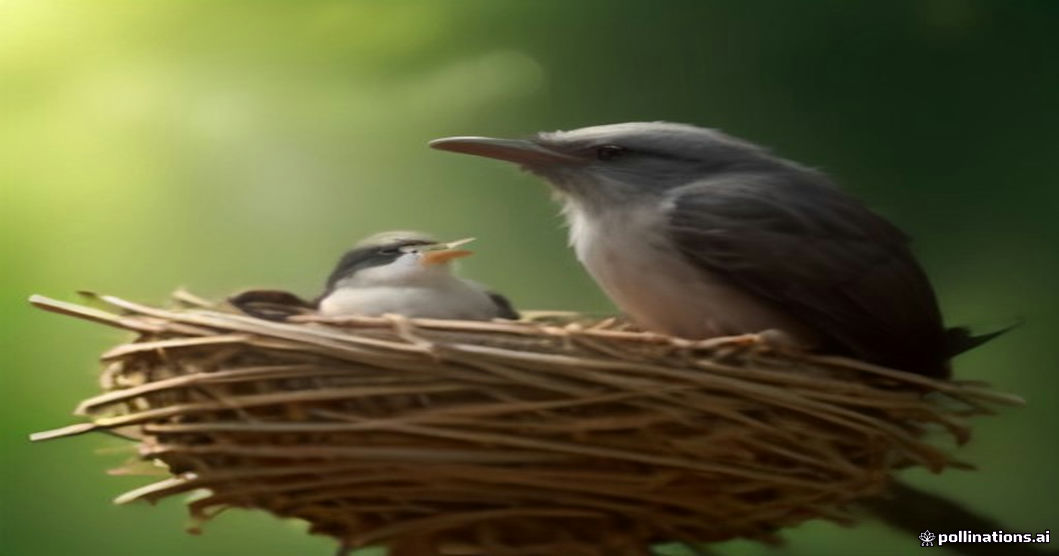
Cuckoos (genus Cuculus) are renowned across the avian world for a cunning and specialized reproductive strategy known as brood parasitism. Rather than investing time and energy into building nests, incubating eggs, and rearing their own offspring, female cuckoos rely on psychological and biological trickery. They covertly lay their eggs in the nests of other unsuspecting bird species, leaving adoptive parents to raise a chick that is not their own.
The Ruthless Quest for Survival
Once hatched, the young cuckoo develops at a remarkably accelerated rate compared to its adopted siblings. Driven by an intense and singular instinct, the cuckoo chick rapidly monopolizes resources. It aggressively snatches food intended for the entire brood and will not hesitate to physically displace its nest-mates. In instances where the cuckoo hatches first, the competition is eliminated even before it has a chance to begin. Despite being small, weak, and entirely featherless, the newborn parasite is capable of systematically evicting an entire clutch of host eggs from the nest.
The Science Behind the Eviction Reflex
This remarkable and seemingly cold-blooded behavior is actually hardwired into the chick’s neurology. A newly hatched cuckoo chick possesses an extraordinarily sensitive back. The moment its skin makes contact with another egg or nestling, a powerful reflex is triggered. The chick arches its back, strains upward on its tiny, undeveloped legs, and relentlessly maneuvers until the foreign objects or competing chicks are pushed completely over the edge of the nest.
Growing Up Monopoly: The Sole Survivor
With no competition for food, warmth, or parental attention, the cuckoo chick experiences exponential growth. By day 20 to 22, the fledgling is ready to leave the nest. At this point, it often reaches a staggering size two to three times larger than its exhausted adoptive parents, standing as a testament to one of the most extreme evolutionary survival tactics in the animal kingdom.
Written by Mohammed Murtaja
Editor-in-Chief & Executive Publisher of ZooPulse. Senior investigative journalist directing evidence-based research, veterinary science verification, and editorial governance.
Related Stories
 Uncategorized
Caribbean Spiny Lobsters: The Unsung Guardians of Coral Reefs
The Secret Protectors of the Reef When we think of marine conservation and the health of our coral reefs, colorful fish and apex predators often steal the spotlight. However, deep within the crystal-clear waters of the Caribbean, a remarkable crustacean is quietly working behind the scenes to maintain the delicate balance of its ecosystem. The […]
 Uncategorized
Unveiling the Boat-billed Heron: The Night-Stalking Ghost of the Mangroves
Introduction to the Boat-billed Heron As a veterinarian and wildlife enthusiast, I am always fascinated by the incredible adaptations found in the avian world. The Boat-billed Heron (Cochlearius cochlearius) is one of the most remarkable and visually striking species you can encounter. Distributed from Mexico down to Brazil, this captivating bird inhabits the densely forested […]
 Uncategorized
The Kangaroo Longevity Gap: Why Captive Marsupials Outlive Their Wild Counterparts
Understanding Kangaroo Lifespan: Wild vs. Captivity When comparing the lifespan of kangaroos, the statistics present a stark contrast. In their native Australian outback, a wild kangaroo typically has a modest life expectancy of about 6 years. However, when placed under human care in zoos or wildlife sanctuaries, these iconic marsupials can easily live for more […]