
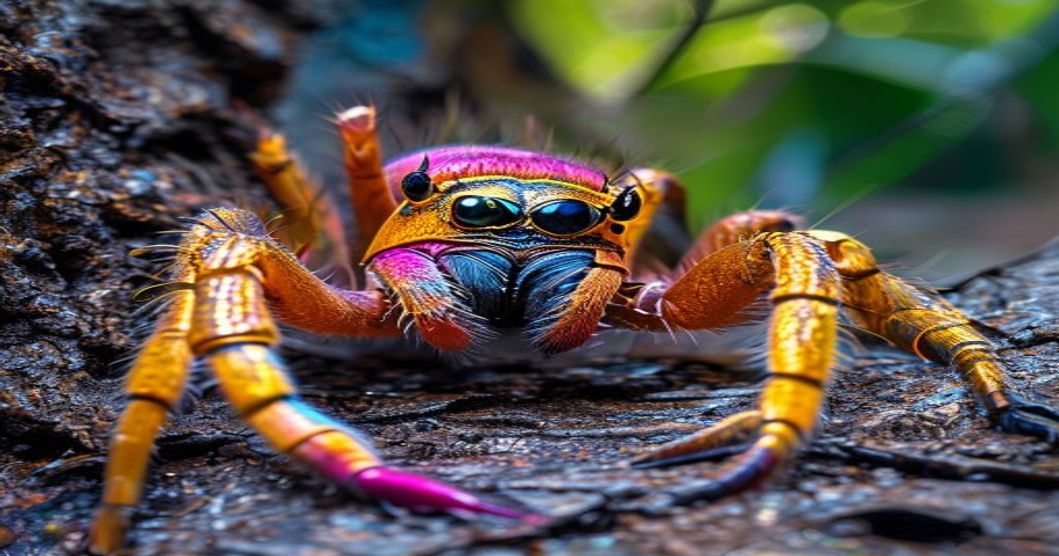
In the vibrant rainforests of Brazil lives a creature that effortlessly shatters common misconceptions about arachnids. The Brazilian Jewel Tarantula (Typhochlaena seladonia) is widely regarded as one of the most visually breathtaking spiders in the world. With a dazzling palette of iridescent blues, reds, yellows, and pinks adorning its tiny frame, this species proves that tarantulas can be as stunning as any gemstone.
Unique Behavior and Natural Habitat
Unlike many terrestrial tarantula species that burrow deep into the soil, Typhochlaena seladonia is an arboreal spider that spends its life high up in the canopy. These miniature architects construct intricate, silk-hinged “trapdoors” camouflaged with bits of tree bark and lichen. Hiding behind these concealed doors, the tarantula patiently waits for an unsuspecting insect to wander past before bursting out with incredible speed to secure its meal.
Size, Diet, and the “Bird-Eater” Myth
Despite belonging to the broader family often colloquially associated with “bird-eating spiders,” the Brazilian Jewel Tarantula does not hunt birds. Given their diminutive size—males reach just 3 to 4 cm and females 4 to 6 cm, including leg span—their diet consists entirely of small insects such as pinhead crickets, fruit flies, and tiny moths. In nature, their brilliant, two-toned coloration serves a vital purpose known as aposematism, visually warning potential predators that they are toxic and unpleasant to eat.
Care, Health, and Husbandry Tips
For experienced invertebrate enthusiasts, providing appropriate care for this dwarf arboreal species requires attention to specific environmental needs:
- Vertical Enclosure: As tree-dwellers, they require vertical terrariums equipped with rough tree bark or cork tubes to allow them to build their characteristic trapdoor hides.
- Humidity and Moisture: Maintaining adequate humidity alongside gentle cross-ventilation is critical for healthy molting. Dehydration is a leading health risk for such small spiderlings.
- Hands-Off Handling: Due to their extremely small size, fragile bodies, and quick movements, these tarantulas should not be handled. They are best appreciated as delicate display animals to prevent injury from accidental falls.
Ethical Ownership and Conservation
Because of their striking appearance, Typhochlaena seladonia has historically faced severe threats from habitat loss and poaching for the exotic pet trade. It is essential for wildlife enthusiasts and prospective keepers to support ethical conservation by only acquiring verified captive-bred individuals, ensuring the protection of wild populations in their native Brazilian habitats.