
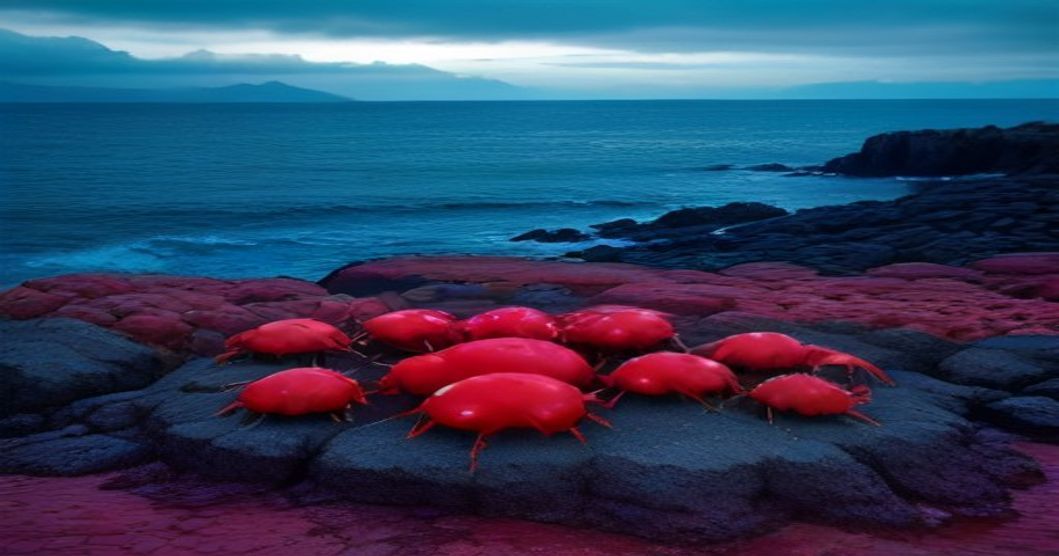
Introduction to the Intertidal Acrobat
Along the rugged, black basalt shores of the Galápagos Islands, a high-stakes survival struggle unfolds daily with the tide. At the center of this dynamic ecosystem is Grapsus grapsus, universally known as the Sally Lightfoot crab. Locals named these brilliantly colored crustaceans after Caribbean dancers in honor of their extreme agility, speed, and rhythmic leap from rock to rock.
Physical Adaptations and Extreme Agility
Unlike many crustacean species that move slowly along the seabed, the Sally Lightfoot crab is an aerial acrobat of the shoreline. Capable of sprinting in all four directions, jumping across gaps, and scaling vertical, wave-washed rock faces, their mobility is their primary defense mechanism. While they must keep their gills moist to breathe properly, staying out of deep water is critical; submerging fully makes them easy targets for waiting marine predators and powerful surf.
The Ambush Predation: Eels and Octopuses on Land
Despite their exceptional speed, the threat landscape for these crabs is intense. Predators like the chain moray eel (Echidna catenata) and coastal octopuses have adapted remarkable hunting techniques to catch them. Taking advantage of wet rock surfaces during low tide, these marine hunters can briefly slither out of the ocean, moving across wet stones to ambush and trap the crabs against steep cliffs.
Ecological Role in Coastal Health
From a veterinary and marine biology perspective, Grapsus grapsus plays a essential role in maintaining intertidal ecosystem health. As opportunistic scavengers, they consume organic detritus and keep algae growth balanced on shoreline rocks. Furthermore, they engage in a mutualistic relationship with marine iguanas, actively picking off ticks and dead skin from the reptiles, serving as an vital link in the coastal food web.
Conclusion
The Sally Lightfoot crab exemplifies how specialized physiological and behavioral adaptations allow a species to thrive in extreme environments. Their incredible maneuverability and fast reflexes make them one of the most fascinating creatures to study in coastal wildlife biology.