
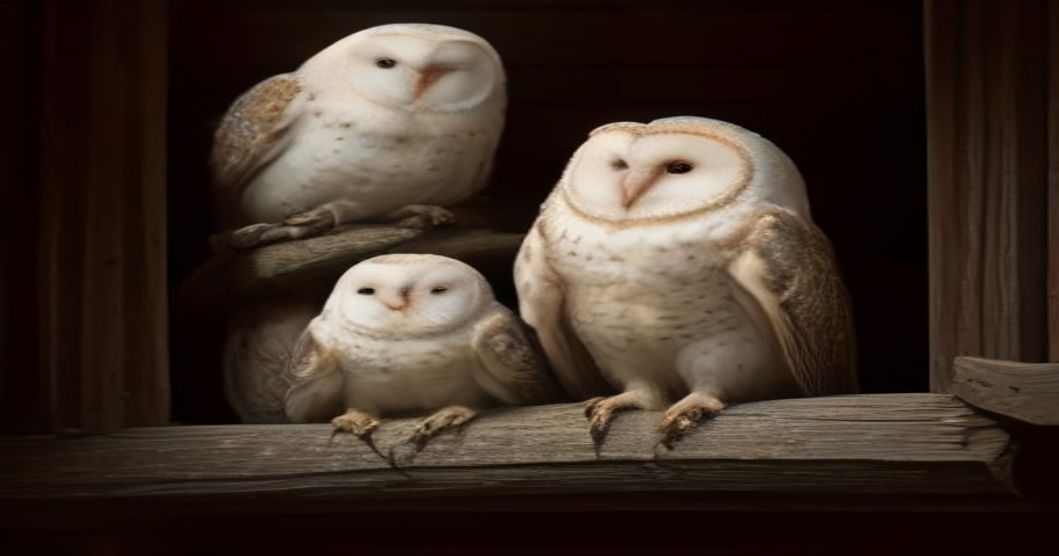
Introduction to the Global Barn Owl
Barn Owls (Tyto alba) are among the most widespread and recognizable raptors in the world. Inhabiting every continent except Antarctica, these magnificent birds have captured the fascination of wildlife enthusiasts and avian experts alike. In Europe, they can be found across various regions, stretching even into parts of the Baltic coast. Known for their heart-shaped faces and silent flight, they play a crucial role in controlling rodent populations in agricultural and rural ecosystems.
Courtship and Nesting Habits
The journey of a new generation begins with the male barn owl, who takes the responsibility of selecting the ideal nesting site. He actively attracts potential mates using harsh, shrill calls that echo through the night. Interestingly, barn owls do not build traditional nests from twigs or leaves. Instead, they prefer enclosed, dark spaces such as tree hollows, subterranean burrows, abandoned buildings, or attics. They will frequently utilize pre-existing nesting sites or structures abandoned by other bird species to lay their clutch.
Development and Rearing of the Chicks
Once hatched, barn owl chicks emerge covered in a fluffy layer of white down. At this vulnerable stage, they are entirely dependent on their hardworking parents for food, warmth, and protection. As they grow, their nutritional demands are immense. After roughly 35 to 45 days, the curious young owls begin exploring outside the immediate nest area. By 50 to 55 days of age, they take their first courageous steps into learning how to fly. True independence is finally achieved around three months of age, when they disperse to establish their own territories.
Avian Expert Insights: Supercharged Night Vision
As a veterinary professional, one of the most remarkable physiological traits I find fascinating in barn owls is their sensory adaptation. Barn owls possess extraordinary night vision. In fact, scientific studies show they can see in the dark about as well as most humans can during broad daylight! This incredible evolutionary adaptation, combined with asymmetrical ears that allow them to pinpoint the exact location of prey by sound alone, makes them apex nocturnal hunters.