
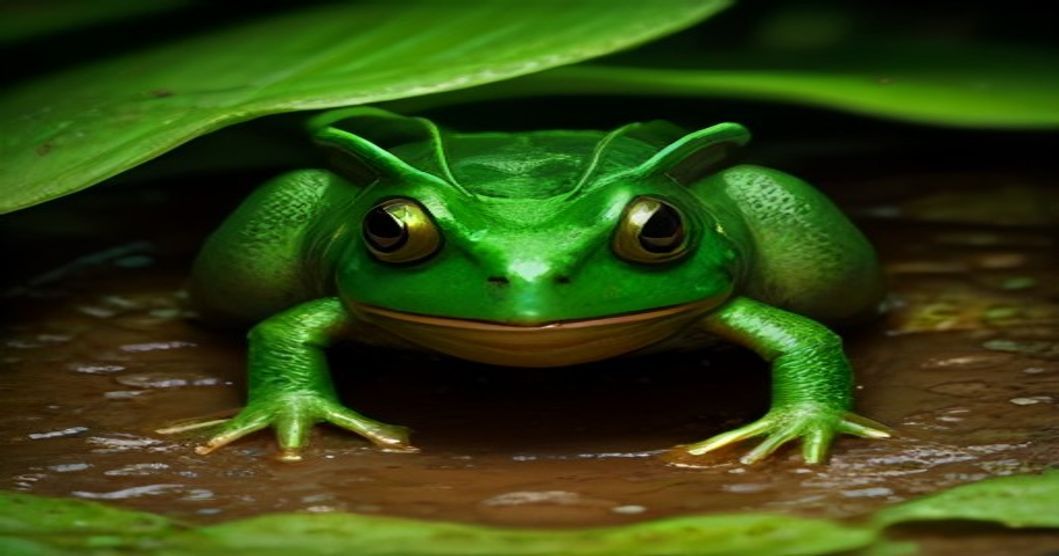
Introduction to the African Bullfrog
In the vast and often harsh landscapes of sub-Saharan Africa, animal survival requires remarkable adaptations. Among the most fascinating is the parenting style of the African Bullfrog (Pyxicephalus adspersus). Known for being surprisingly devoted fathers in the animal kingdom, these massive amphibians showcase a complex blend of fierce protection and, eventually, opportunistic predation.
The Devoted Dad: Protection and Engineering
Male African bullfrogs are paragons of amphibian paternal care. Growing to an impressive size of 20 to 25 centimeters and equipped with sharp, odontoid projections (tooth-like structures), these males are formidable guardians. After mating, the female leaves the responsibility of raising the offspring entirely to the male. He diligently guards the shallow puddles where the eggs are laid against predators. As the relentless African sun threatens to evaporate their temporary home, the resourceful father takes direct action, using his powerful legs to dig a canal connecting the drying puddle to a safer, more permanent water source.
A Delicate Balance: Care Versus Carnivory
While the tadpoles feed near the surface of the water, the protective father swims closely by, warding off potential threats. However, the relationship between father and offspring changes dramatically as the tadpoles develop. Once the young begin to undergo metamorphosis and transform into froglets, the protective instinct fades, and the father’s voracious carnivorous nature takes over. In a striking twist of survival biology, he may consume the very young he spent weeks guarding, highlighting the pragmatic and wild nature of reptile and amphibian husbandry.