
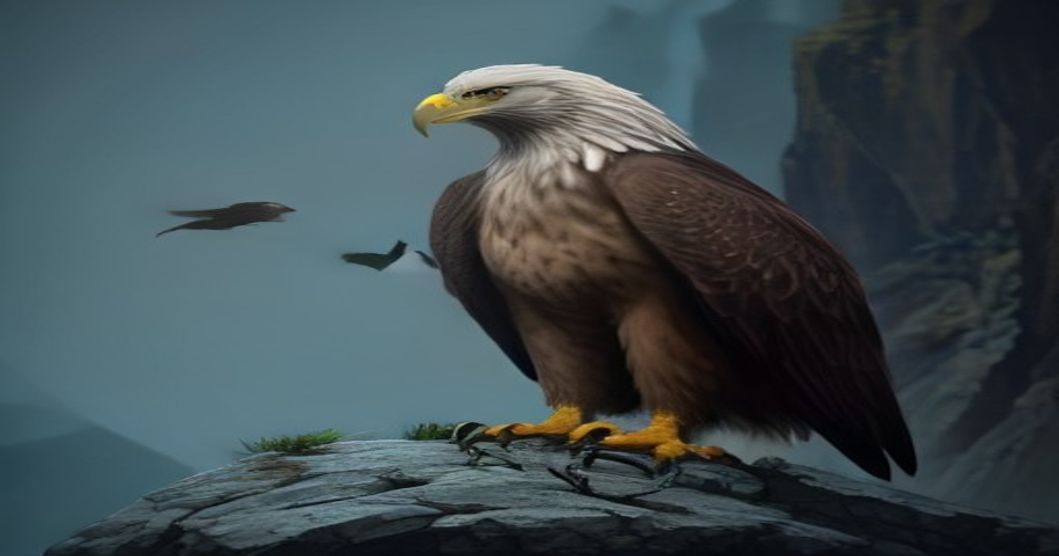
The Surprising Strength of the Golden Raptor
In the natural world, we often categorize animals into ‘predators’ and ‘prey.’ However, the lines become blurred when discussing the incredible capabilities of large eagles. While many view the eagle as a majestic symbol of the wilderness, it is, in reality, a highly efficient and powerful apex predator capable of tackling animals that many would assume are outside its weight class. A prime example of this prowess is the eagle’s ability to hunt and manage medium-sized predators, such as the red fox.
Tackling the Red Fox: A Feat of Strength
An adult fox typically weighs between 6 to 10 kg, making it a substantial opponent. For an eagle to successfully hunt a fox, it relies on more than just size; it utilizes a combination of extreme grip strength and strategic striking. The talons of a large eagle can exert hundreds of pounds of pressure per square inch, effectively neutralizing a fox quickly. This interaction highlights the eagle’s role at the very top of the food chain, where even clever land-dwelling predators must remain vigilant of the skies.
The Biological Advantage: Eyesight Beyond Human Limits
The secret to the eagle’s success as a hunter lies in its specialized biology, particularly its vision. It is a scientific marvel that eagles possess eyesight up to 8 times sharper than that of a human. This allows them to spot a small mammal or a camouflaged fox from several kilometers away while soaring at high altitudes. Their retinas are more densely packed with light-detecting cells, and they possess a deep fovea, which acts like a telephoto lens, providing incredible detail over vast distances.
The Mechanics of the Hunt
When an eagle spots its target, it transition from a high-altitude soar into a high-speed dive. By the time the prey realizes it is being hunted, the eagle has already calculated the trajectory. This combination of visual precision, aerial speed, and sheer physical power makes the eagle one of the most successful hunters in the avian world. Understanding these dynamics is essential for wildlife enthusiasts and veterinarians alike, as it underscores the importance of habitat preservation for these magnificent birds of prey.