
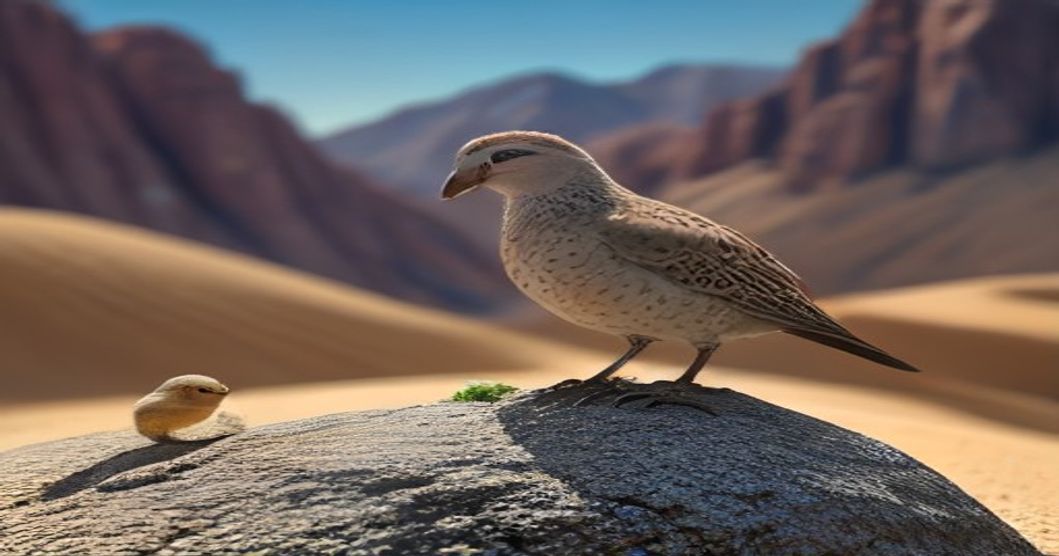
The Desert Partridge (Ammoperdix griseogularis) stands as a testament to nature’s ability to adapt to some of the harshest environments on Earth. Typically found across the arid, rocky foothills of Central and South Asia, these birds have evolved specialized biological and behavioral traits that allow them to thrive where many other species would perish. From a veterinary and conservation perspective, their physiological resilience offers a fascinating look into avian survival.
The Master of Camouflage
One of the most striking features of the Desert Partridge is its nearly perfect camouflage. Their plumage mimics the subtle earthy tones and textures of the limestone and shale slopes they call home. For a parent bird with chicks, this invisibility is the primary line of defense. When threatened, the entire family remains motionless, blending seamlessly into the desert floor. This evolutionary tactic is so effective that even the keenest predators often overlook them from just a few feet away, highlighting the importance of ‘hiding in plain sight’ as a survival mechanism.
Survival in Arid Landscapes
Living in regions with extreme heat and minimal rainfall requires exceptional metabolic efficiency. These birds have mastered the art of water conservation. While they will utilize standing water when available, they are uniquely capable of surviving for extended periods without it. They bridge this hydration gap by extracting moisture from the succulent plant matter and seeds they consume. This allows them to inhabit remote, dry slopes that are inaccessible to many other avian species.
Dietary Habits and Foraging
The diet of the Desert Partridge is primarily granivorous, consisting of seeds, shoots, and various plant-based nutrients found among the rocks. By foraging along the foothills, they maintain a high-fiber diet that provides the energy needed for their active lifestyle. Unlike many birds that rely on flight to escape danger, the Desert Partridge often prefers to run up steep, rocky inclines, a behavior that requires significant muscular strength and a steady supply of nutrients from their forage.
Parental Care and Chick Development
Seeing a Desert Partridge with its chicks is a rare and beautiful sight. The chicks are precocial, meaning they are relatively mobile shortly after hatching. However, they are highly dependent on their parents to navigate the treacherous terrain and learn the art of concealment. The parental bond ensures that the chicks are guided to the best feeding grounds while staying protected from the elements and predators alike, ensuring the continuation of the species in a challenging world.