
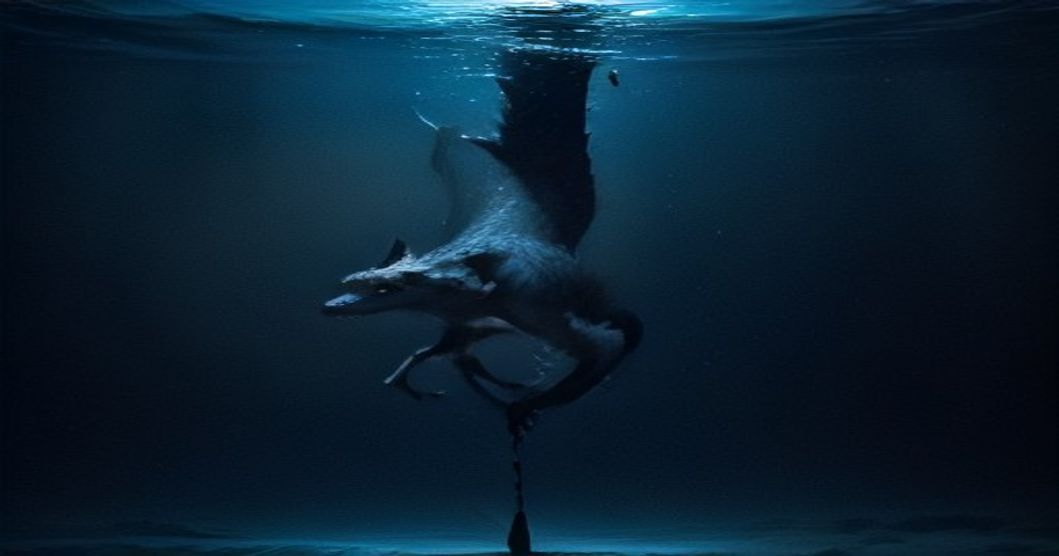
An Ancient Evolutionary Legacy
Over 400 million years ago, a pivotal evolutionary divergence took place in the ancient oceans. While one line of cartilaginous fish evolved into the sleek, surface-dwelling sharks and rays we recognize today, another branch ventured into the silent, pitch-black depths of the abyssal zone. These ocean wanderers became the chimaeras, extraordinary marine creatures that offer a living window into prehistoric aquatic life.
Adapting to the Abyssal Depths
Inhabiting ocean depths exceeding 2.5 kilometers, Chimaera monstrosa thrives in an environment defined by crushing hydrostatic pressure, frigid temperatures, and complete darkness. In this realm, conventional predatory strategies like swift pursuit are ineffective. Unlike many deep-sea organisms that rely on bioluminescence to attract prey, the chimaera utilizes a highly specialized lateral line system. This sensory network functions as an intricate tactile and electro-receptive array, allowing the fish to detect subtle movement and pressure changes from nearby prey hidden in the benthic sediment.
Defensive Weaponry and Marine Significance
Despite their eerie, ghost-like appearance, chimaeras possess robust defensive adaptations. To protect themselves against deep-sea predators, they feature a sharp, venomous spine situated directly in front of their dorsal fin. As unique members of the class Holocephali, these creatures play a vital ecological role in maintaining the balance of deep-water marine ecosystems. Studying their biology provides marine health experts and evolutionary biologists with invaluable insights into primitive vertebrate development and deep-sea survival mechanisms.