
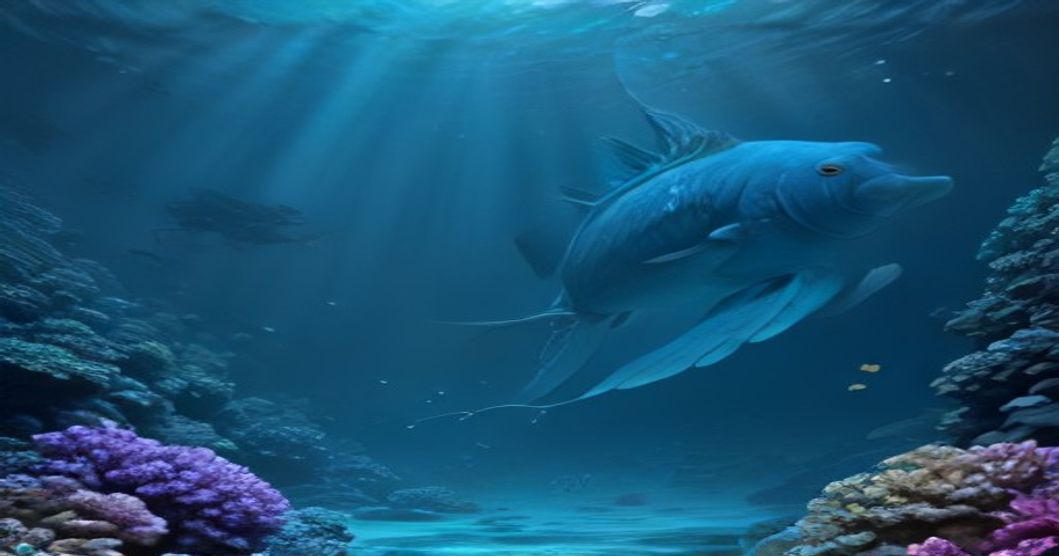
Deep within the vibrant, sun-drenched marine ecosystems of the Red Sea and the warm waters of the Indian and Pacific Oceans resides one of the sea’s most breathtaking treasures: the Napoleon Wrasse (Cheilinus undulatus). As the undisputed giant of the wrasse family, this incredible fish—also frequently referred to as the humphead wrasse—captivates marine biologists, divers, and animal enthusiasts alike with its regal presence, distinct prominent facial crest, and remarkable intelligence.
Extraordinary Size and Striking Appearance
While encountering a 60-centimeter individual underwater is already a memorable experience, the full growth potential of the Napoleon Wrasse is truly staggering. Mature males can reach colossal lengths of up to 230 centimeters (over 7.5 feet) and weigh an astonishing 191 kilograms (420 pounds). Beyond their sheer scale, these fish are celebrated for their intricate, labyrinth-like facial patterns and vibrant coloration ranging from brilliant blues and greens to warm shades of yellow.
Behavior, Habitat, and Daily Rhythm
Despite their imposing size, Napoleon Wrasses possess a remarkably docile and curious nature. They are notoriously fearless around humans, frequently swimming alongside divers and allowing observers to appreciate their grandeur up close. In their natural habitat, these giants lead a solitary and diurnal lifestyle. During the daylight hours, they patrol their defined home territories along outer reef slopes. As night falls, they retreat into the protective shelter of coral caves and crevices to sleep safely until dawn.
A Specialized Diet Vital for Reef Health
The Napoleon Wrasse plays a critical ecological role in maintaining the balance of coral reef habitats. Armed with heavy, powerful jaws and tough pharyngeal teeth, their diet consists of hard-shelled mollusks, sea urchins, crustaceans, and various fish species. Notably, they are one of the few predators capable of consuming toxic reef species, such as boxfish, sea hares, and the destructive crown-of-thorns starfish. By keeping these populations in check, the Napoleon Wrasse serves as a key guardian of reef biodiversity and structural health.