
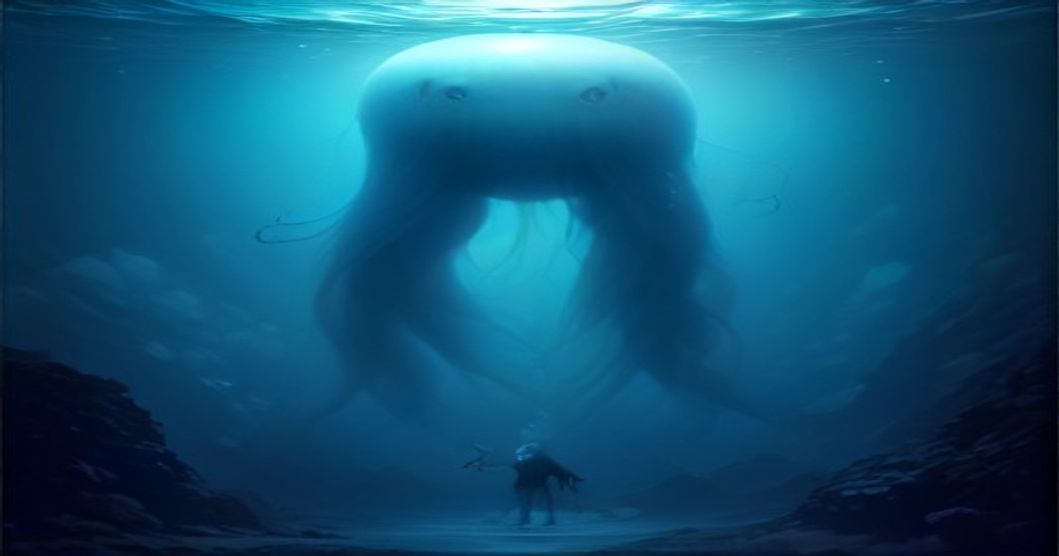
In the vast, uncharted realms of the deep ocean, nature continues to conceal some of its most awe-inspiring and enigmatic creatures. Among them is the Stygiomedusa gigantea, commonly known as the giant phantom jellyfish. As a veterinary professional and marine life enthusiast, encountering a species of such staggering proportions and mysterious biology is always a thrilling reminder of how much we still have to learn about our planet’s aquatic ecosystems.
Anatomy of a Deep-Sea Titan
The Stygiomedusa is nothing short of breathtaking. Featuring a massive, bell-shaped umbrella that can measure up to one meter in width, this deep-dwelling invertebrate commands attention. Unlike many of its more common jellyfish relatives, it lacks traditional stinging tentacles. Instead, it possesses four exceptionally long, ribbon-like oral arms that can trail behind it for an astonishing ten meters. These specialized appendages are used to gracefully capture prey in the perpetual darkness of the deep sea.
Habitat and Rarity
Distributed globally but rarely observed, these ghostly giants inhabit the bathypelagic zone. Sightings have been documented off the Pacific coast of the United States, near Japan, and within the Gulf of Mexico. Despite their massive size, encounters are extraordinarily rare—marine scientists and remotely operated vehicles (ROVs) spot them on average only about once a year. This scarcity makes every observation a monumental event for marine biologists striving to understand their behavior, life cycle, and ecological role in the deep ocean.