
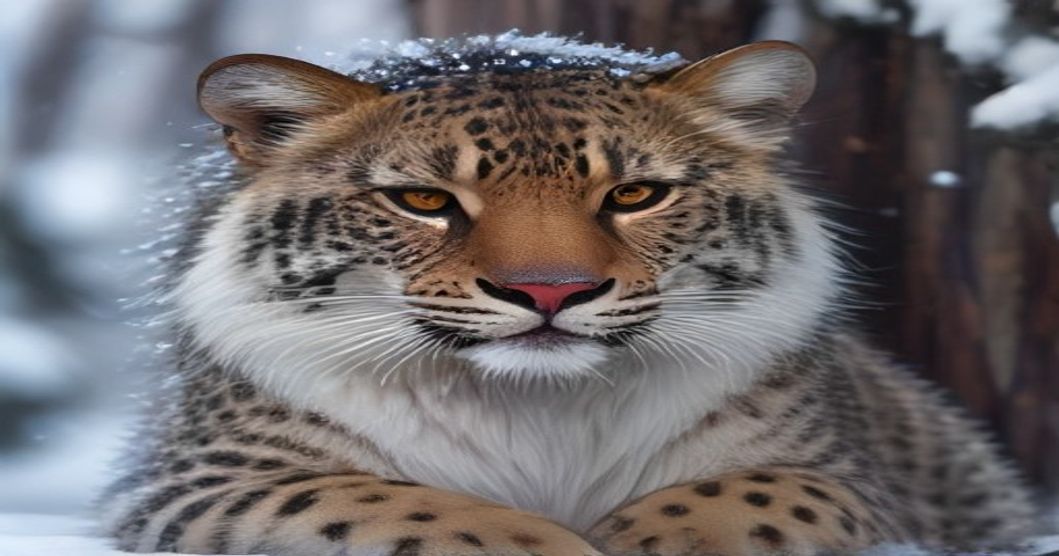
With an intensity that commands both awe and respect, the gaze of the North Chinese leopard remains one of the most captivating sights in the natural world. As a distinct subspecies of leopard native to the forests and mountains of northern China, Panthera pardus orientalis—often closely associated with or grouped near Amur leopard ecosystems—possesses a unique allure. But beyond their striking amber eyes and mesmerizing rosettes lies a deeply resilient big cat facing modern conservation challenges.
Anatomy and Adaptation of a Northern Predator
Unlike their tropical counterparts, North Chinese leopards have evolved to withstand harsh, freezing winters. Their coats are noticeably thicker, denser, and feature a paler, more golden background hue designed to camouflage against snowy landscapes and rocky terrain. Weighing up to 100 pounds, these solitary hunters rely heavily on stealth, agility, and exceptional binocular vision. Their striking eyes are not just beautiful; they are precision instruments adapted for low-light conditions, allowing them to stalk prey efficiently through twilight forests and rugged crags.
Health, Behavior, and Veterinary Insights
From a zoological and veterinary perspective, maintaining the health of large felids requires a delicate understanding of their physiological needs. In both wild management and conservation breeding programs, specialists monitor key indicators of health, including coat condition, dental integrity, and ocular clarity. The piercing gaze of a healthy leopard often reflects optimal neurological function and absence of systemic disease. Stressors in fragmented habitats can impact their immune systems, making habitat connectivity and veterinary surveillance critical for their long-term survival.
Conservation Status and the Path Forward
Regrettably, habitat loss, poaching, and depletion of natural prey have drastically reduced North Chinese leopard populations. Dedicated conservationists, wildlife veterinarians, and researchers are currently working tirelessly to secure wildlife corridors, protect remaining forest habitats, and mitigate human-wildlife conflict. Ensuring the survival of this magnificent subspecies guarantees that future generations can still be spellbound by the piercing, unforgettable gaze of one of nature’s most elusive apex predators.