
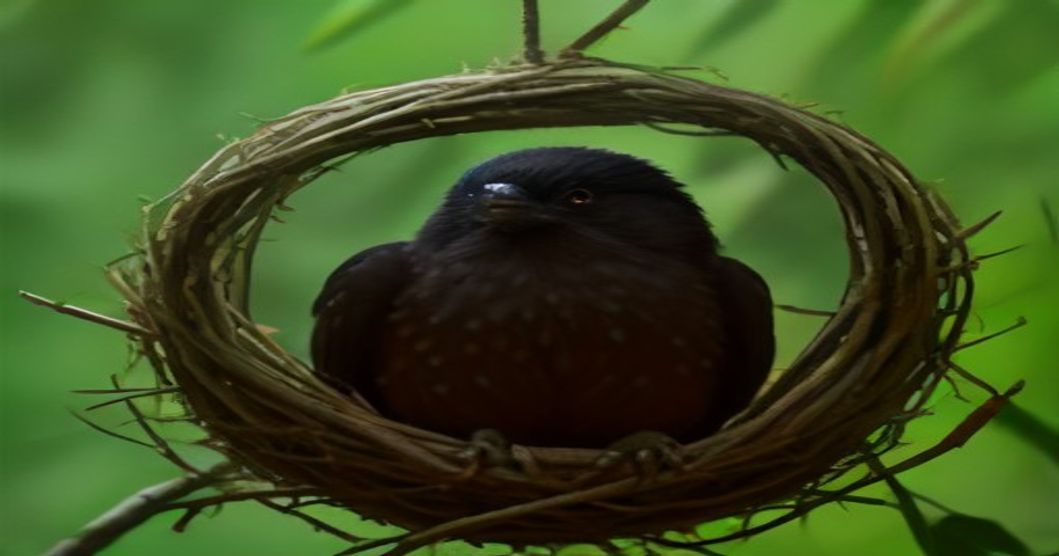
Meet the Greater Coucal: A Unique Member of the Cuckoo Family
When most people think of cuckoos, they picture the infamous brood parasites that slyly deposit their eggs in the nests of unsuspecting host species. However, not all cuckoos play by these rules! The Greater Coucal (scientifically known as Centropus sinensis, and sometimes historically associated with the Indian cuckoo group) is a fascinating exception to the rule. Unlike many of its relatives, the Greater Coucal takes full parental responsibility, diligently building its own nest and raising its chicks itself.
Physical Characteristics and Habitat
Distinguished by a prominent long spur on its hind toe—which actually earned it an alternative classification name—this is a remarkably robust bird. Reaching lengths of up to 50 centimeters, the Greater Coucal is roughly the size of a common crow. A striking feature of its anatomy is its large, wide, and rounded tail, which accounts for approximately half of its total body length, giving it a very distinct silhouette in flight and while perching.
Native to the lush landscapes of India and Sri Lanka, this species thrives in tropical and subtropical habitats. They prefer areas with dense vegetation, often making their homes in regions rich with thorny bushes and thick undergrowth.
Nesting Habits and Parental Care
Unlike parasitic cuckoos, Greater Coucals are dedicated home builders and parents. They construct their nests securely among tree branches, hidden deeply within dense and thorny bushes usually positioned relatively close to the ground. The nest itself is a marvel of avian architecture: a roughly spherical structure complete with a protective roof. Despite the considerable size of the bird, the nest is relatively compact. In fact, it is often so snug that when the adult is incubating the clutch or brooding its chicks, its long tail pokes conspicuously right out of the side entrance!
By raising their own young, Greater Coucals showcase a fascinating evolutionary divergence within the Cuculidae family, reminding us of the incredible diversity found in the avian world.