
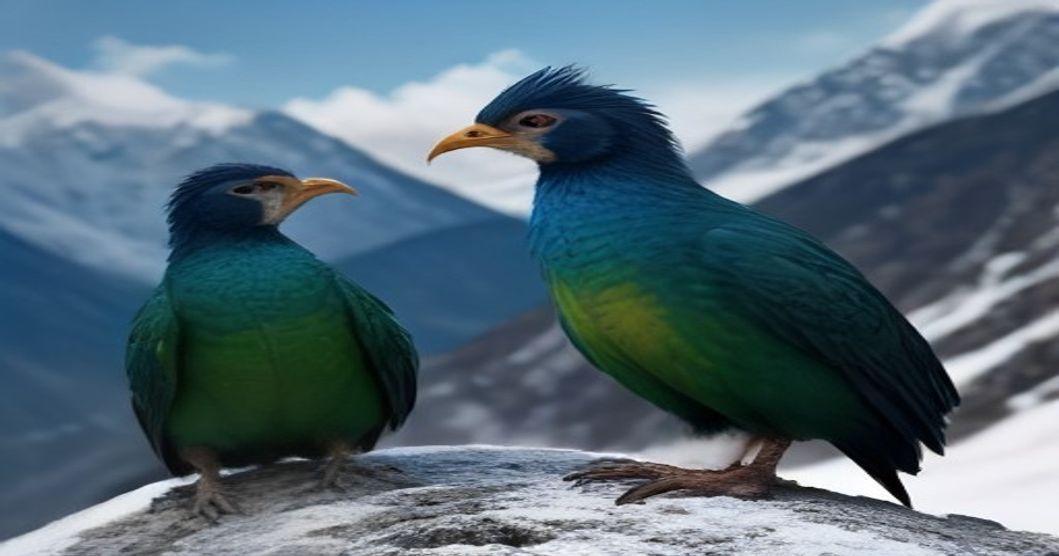
As a veterinarian and avian enthusiast, I am always captivated by the remarkable adaptations and striking aesthetics found in high-altitude wildlife. Among the most breathtaking representatives of the avian world is the Himalayan Monal (Lophophorus impejanus), a magnificent pheasant that also holds the prestigious title of the national bird of Nepal. Known scientifically for its striking dimorphism and rugged mountain lifestyle, this species is a true marvel of nature.
A Symphony of Color and Dimorphism
The Himalayan Monal exhibits one of the most pronounced sexual dimorphisms in the bird kingdom. Females are clad in modest, protective shades of brown, providing essential camouflage while nesting and rearing young in vulnerable ground environments. Males, on the other hand, are an absolute riot of colors. Adorned with dazzling iridescent plumage that shimmers in the alpine sunlight, males feature a striking green metallic crest with white tips, a copper-red neck, and a cascade of blue, green, and purple feathers. Despite their bulky appearance, they are strong flyers, though like many game birds, they take to the air quite reluctantly, preferring to navigate their steep mountain homes on foot.
Diet, Foraging, and Seasonal Migration
Equipped with a strong, slightly downward-curved beak, the Himalayan Monal is exceptionally well-adapted for foraging in rocky, unforgiving terrain. Their diet primarily consists of seeds, tubers, and various plant parts, supplemented by protein-rich insects discovered by digging through soil and leaf litter. These birds typically emerge from their daytime hiding spots within alpine bushes to feed on open slopes during the cooler hours of early morning and evening. Demonstrating fascinating seasonal behaviors, they ascend to higher altitudes during the summer months, following the retreating snowline up to the edge of eternal snow to feed on fresh alpine flora.
Social Structure and Behavioral Ecology
Himalayan Monals are generally social creatures outside of the breeding season, often observed moving in small, cohesive groups typically consisting of one dominant male and several females. From a veterinary and behavioral perspective, their mating rituals are particularly extraordinary. During the breeding season, the male performs an elaborate, dazzling courtship dance, fanning his tail and strutting to showcase his brilliant plumage. This visual spectacle not only intensifies his vibrant coloration but also plays a vital role in mate selection, ensuring the continuation of this dazzling high-altitude species.