
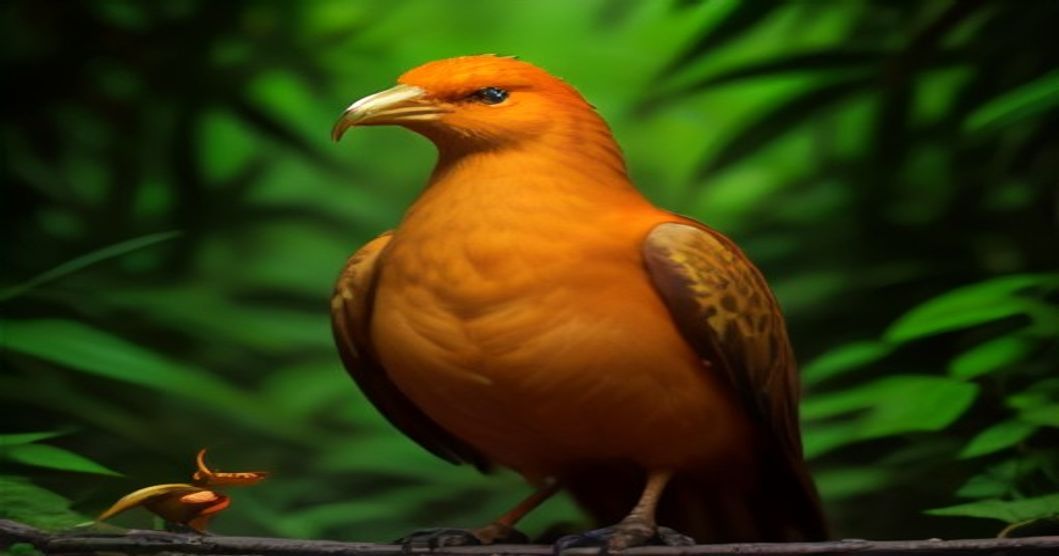
Introduction to the Flame Bowerbird
Deep within the humid, emerald canopies of New Guinea’s tropical rainforests resides one of nature’s most dazzling avian architects: the Flame Bowerbird (Sericulus ardens). As a standout member of the bowerbird family, this species captivates ornithologists, wildlife photographers, and bird enthusiasts alike with its breathtaking plumage and remarkably complex behavioral repertoire.
Vibrant Plumage and Evolutionary Purpose
The male Flame Bowerbird boasts an incandescent display of fiery orange and velvety black feathers. These radiant, saturated hues are far from mere aesthetic marvels; they serve a vital evolutionary purpose. In the dense, shadowed understory of the rainforest, this striking coloration acts as a powerful visual signal. It plays a critical role in attracting potential mates during the breeding season and is equally important for establishing dominance and territorial boundaries among competing males.
Master Builders and Elaborate Courtship Rituals
True to their family name, male Flame Bowerbirds are renowned for their architectural prowess. They meticulously construct structural masterpieces known as “bowers”—avenues built from interwoven twigs and grasses on the forest floor. These structures serve no domestic purpose for raising young; rather, they are exclusively theatrical stages designed to impress females.
When a prospective mate approaches the bower, the male initiates a mesmerizing courtship dance. Displaying his brilliant plumage, he picks up a carefully selected “gift” in his beak—often brightly colored berries, leaves, or shiny objects—and presents it to his sole, critical spectator. This intricate performance demonstrates the male’s health, vigor, and cognitive capability, ensuring the continuation of this magnificent species through selective breeding.