
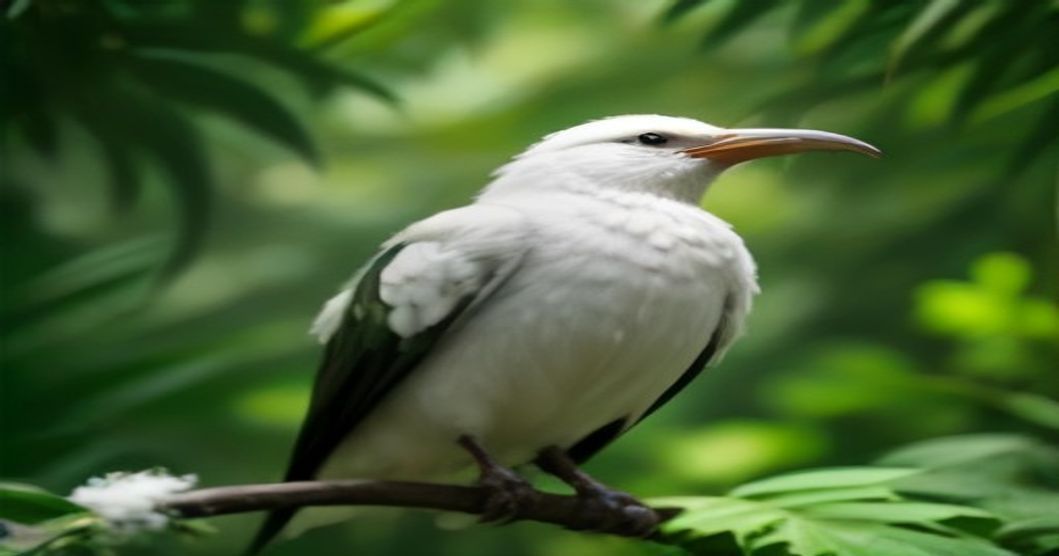
Introduction to the White Bellbird
The White Bellbird (Procnias albus) is one of the most fascinating and visually striking avian species found in the tropical rainforests of Guyana, Venezuela, and the Brazilian state of Pará. As a professional veterinarian and avian enthusiast, studying the unique adaptations of this remarkable bird offers incredible insight into the diversity of wildlife in South America.
Physical Characteristics and Sexual Dimorphism
This species exhibits a striking degree of sexual dimorphism. The adult male is unmistakable with its pristine white plumage and a bizarre, fleshy, worm-like wattle hanging from its beak, which resembles a single, prominent mustache. In stark contrast, the female White Bellbird displays a muted olive-green coloration with subtle yellowish streaks underneath, completely lacking the distinctive facial appendage found in males.
The World’s Loudest Bird Call
Beyond its appearance, the male White Bellbird is globally renowned for a truly astonishing physiological feat: producing the loudest recorded bird call in the world. Their deafening calls can reach an incredible 125 decibels. To put this into perspective, human-made sounds like a rock concert hover around 84 decibels, car horns reach 110 decibels, and pneumatic drills measure at 120 decibels. Only a roaring jet engine at 150 decibels surpasses them.
Avian Health and Safety Considerations
From an animal welfare and human health perspective, keeping a White Bellbird in captivity is entirely impractical and strongly discouraged. Because the safe sound level for human ears tops out at 85 decibels, listening to a captive bellbird’s mating call up close could cause permanent hearing damage. These magnificent creatures truly belong in their natural, expansive forest habitats where their booming calls can resonate safely across the canopy.