
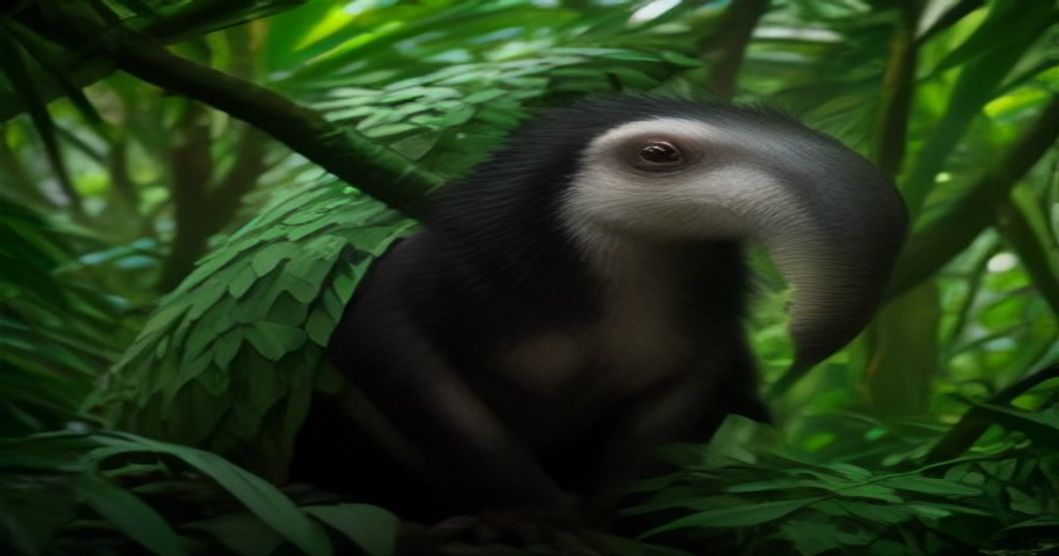
Introduction to the Four-toed Anteater
The four-toed anteater, scientifically known as Tamandua tetradactyla and frequently referred to as the collared anteater, is a remarkable native of South America. Their geographic range stretches extensively from southern Colombia and Venezuela all the way down to northern Argentina. Unfortunately, wild populations are experiencing a steady decline due to escalating threats such as deforestation and poaching.
Natural Habitat and Arboreal Lifestyle
These specialized mammals thrive primarily in humid tropical forests as well as open savannas, typically residing near streams and rivers. While they occasionally make their homes in abandoned animal burrows or dig shallow dens of their own, four-toed anteaters heavily prefer the safety and shelter of tree hollows. Because of their specialized, long claws, their locomotion on the ground appears quite slow and awkward. Consequently, they are exceptional climbers, spending a significant portion of their lives in the canopy and utilizing their prehensile tails for crucial balance.
Physical Characteristics and Size
When compared to their massive relatives, the giant anteaters—which can grow up to 1.5 meters in length and reach weights of 40 kg—the four-toed anteater is notably compact. Typical adult body lengths range from 55 to 85 cm, complemented by a bushy tail measuring an additional 40 to 50 cm. Generally, a healthy adult will weigh between 4 and 5 kg.
Unique Defense Mechanisms
Beyond their distinct physical appearance and arboreal habits, four-toed anteaters possess fascinating behavioral adaptations. Among these is a unique and potent defense mechanism used to deter potential predators in their natural South American habitats, making them truly resilient survivors of the tropical wilderness.