
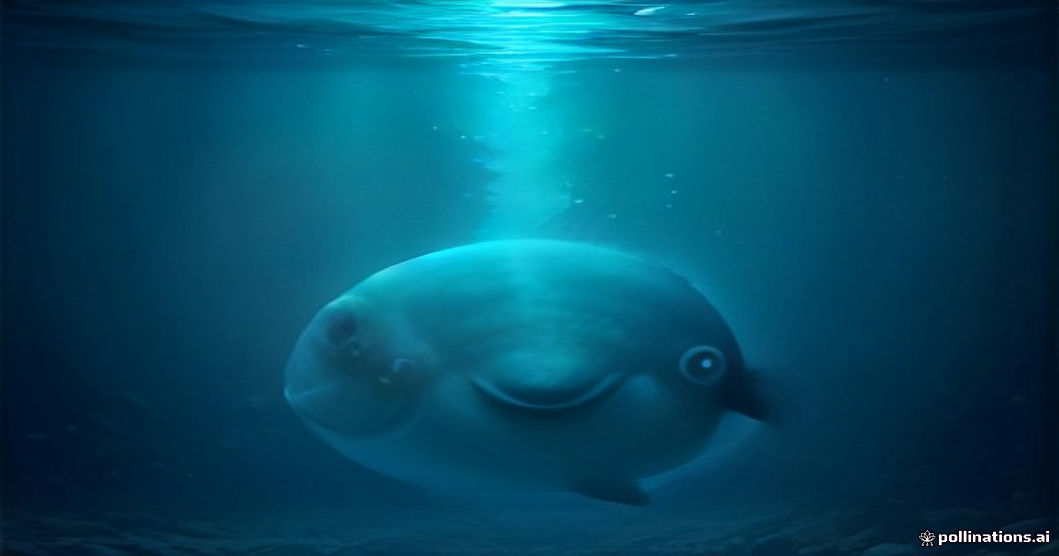
In the perpetual twilight of the ocean’s mesopelagic zone, life adapts in ways that challenge our fundamental understanding of anatomy and evolutionary biology. Among the most extraordinary inhabitants of this extreme environment is Macropinna microstoma, commonly known as the Pacific barreleye fish. Thriving at depths between 600 and 800 meters (roughly 2,000 to 2,600 feet), this species exhibits physiological adaptations that border on the surreal, offering marine biologists and animal health specialists profound insights into extreme survival.
A Transparent Window into Extreme Ophthalmology
The defining physiological feature of Macropinna microstoma is its completely transparent, fluid-filled cranial dome. Inside this delicate shield sit two bright green, tubular eyes. Unlike conventional vertebrate eyes positioned on either side of the head, the barreleye’s tubular eyes are capable of rotating within the cranial cavity. In their default state, the eyes gaze upward toward the surface, scanning the faint downwelling sunlight for silhouettes of prey—primarily small crustaceans and siphonophores.
When prey is detected or when maneuvering to feed, the fish can rotate these tubular eyes forward to focus on what lies directly in front of its mouth. The vivid emerald-green coloration of the ocular lenses is an adaptation designed to filter out ambient sunlight coming from the surface, enhancing the contrast and visibility of faint bioluminescent glows emitted by deep-sea organisms.
The Facial Paradox: Olfactory Organs Disguised as Eyes
At first glance, observers frequently mistake the two dark, round indents situated just above the fish’s small mouth for its eyes. From an anatomical perspective, these structures are actually external nares—specialized olfactory organs packed with olfactory receptor cells. In the near-total darkness of the ocean abyss, chemical detection plays a critical role alongside vision, allowing the barreleye to sense micro-currents of scent and biological waste left behind by drifting prey.
The Sixty-Five Year Scientific Mystery
Although Macropinna microstoma was formally documented by marine biologist Wilbert McLeod Chapman in 1939, science possessed an incomplete picture of the animal for more than six decades. Early specimens were retrieved using standard deep-sea trawling nets; the dramatic pressure differentials and physical trauma of ascent routinely destroyed the fragile, fluid-filled cranial shield before the fish reached the surface. As a result, early illustrations depicted a fish with a solid, opaque head.
It was not until 2004, when researchers at the Monterey Bay Aquarium Research Institute (MBARI) utilized high-definition remotely operated underwater vehicles (ROVs), that the living creature was observed intact in its natural habitat. The ROV footage revealed the pristine transparent shield for the first time, rewriting decades of marine textbook entries overnight.
Physiological Lessons from the Ocean Depths
The barreleye fish serves as a masterclass in bioenergetics and pressure adaptation. Residing in a low-oxygen, high-pressure ecosystem with scarce nutritional resources, Macropinna microstoma relies on large, flat fins that allow it to hover almost motionless in the water column, expending minimal caloric energy. Understanding the specialized biochemistry of its lens pigments, the structural integrity of its fluid mantle, and its metabolic resilience continues to inspire veterinary researchers, physiologists, and marine conservationists alike.