
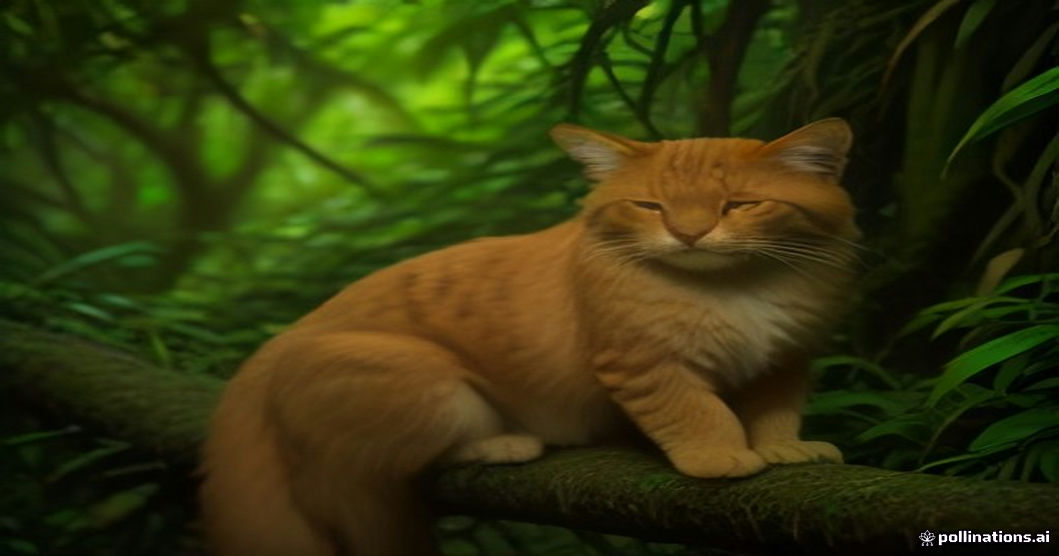
Introduction to Africa’s Most Elusive Forest Felid
Deep within the dense canopy of Equatorial Africa’s tropical rainforests roams one of the most enigmatic carnivores on Earth: the African golden cat (Caracal aurata). Ranging from Senegal in the west to southern Kenya in the east, and southward to northern Angola, this solitary predator finds its primary stronghold in the lush, moisture-rich forests of the Congo Basin. Despite occupying extensive forest habitats, direct encounters with wild specimens remain exceptionally rare, earning this cat a reputation as the ghost of the African wilderness.
Evolutionary Lineage and Taxonomy
Genomic research has unveiled fascinating insights into the evolutionary background of the African golden cat. Phylogenetic analyses show that Caracal aurata diverged from a common ancestor shared with the desert-dwelling caracal and the agile serval approximately five million years ago. Today, modern taxonomy places both the golden cat and the caracal within the genus Caracal. This close biological link illustrates remarkable adaptive divergence: while its sister species conquered arid savannas and dry scrublands, the African golden cat adapted specifically to the dense, multi-layered environment of the equatorial moist evergreen forest.
Physical Profile and Anatomic Adaptations
Morphologically, the African golden cat is roughly twice the size of an average domestic cat, presenting a robust, muscular build optimized for agility and stealth. Adult males generally weigh between 11 and 14 kilograms, with shoulder heights ranging from 40 to 50 centimeters. Their total body length spans 90 to 120 centimeters, approximately one-third of which is accounted for by a sturdy, functional tail that acts as a counterbalance during movement across uneven terrain and tree limbs.
Equipped with powerful limbs, compact paws, and keen stereoscopic vision, the species exhibits classic anatomical hallmarks of an apex small-to-medium forest predator. Their auditory bullae are exceptionally developed, enabling them to detect the faint rustling of prey under thick rainforest undergrowth.
Behavioral Ecology and Arboreal Habits
Due to their secretive lifestyle and rugged habitat, much of what veterinary scientists and field biologists know about African golden cats comes from remote camera-trap monitoring. They are largely solitary animals that maintain structured home ranges. While long considered strictly nocturnal, current tracking data suggests cathemeral activity patterns, with hunting spikes often aligned with dawn and dusk.
During the humid midday hours, these cats frequently climb into the sub-canopy to rest securely on horizontal tree branches away from terrestrial ground predators. At night, they descend to stalk a diet consisting predominantly of rodents, small duikers, forest birds, and arboreal primates caught foraging near the forest floor.
The Mystery of Coat Polymorphism
One of the most biologically striking features of the African golden cat is its pronounced coat polymorphism. Often described as having the ability to change coloration, the species exhibits dynamic color phases ranging from rich golden-red and chestnut brown to slate grey and melanistic (pure black). Field observations and captive records have documented individual cats undergoing noticeable shifts in pelage tone between seasonal molts, likely influenced by dietary factors, hormonal changes, and thermal regulation requirements.
Conservation and Health Outlook
From an ecological and veterinary perspective, the African golden cat serves as an essential bioindicator of forest integrity. Unfortunately, habitat fragmentation driven by logging, infrastructure development, and widespread wire-snare bushmeat poaching in Central Africa poses severe threats to their survival. Safeguarding large, contiguous blocks of the Congo Basin is crucial not only for conserving this mysterious felid but also for preserving the ecological balance of Africa’s ancient tropical rainforests.