
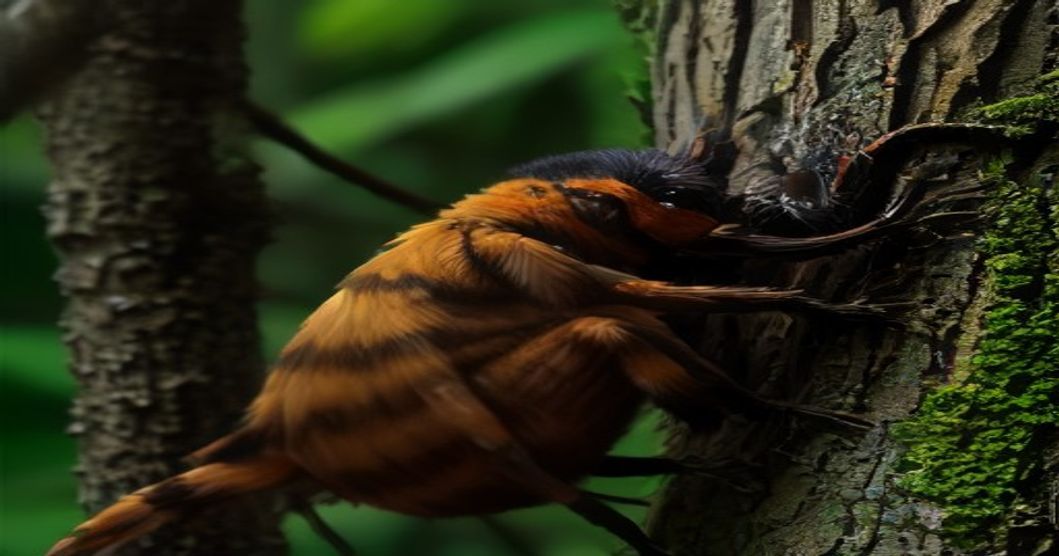
Introduction to the Brazilian Jewel Tarantula
As a veterinarian and exotic pet care specialist, I am always captivated by the sheer diversity and beauty of the animal kingdom. Among the most mesmerizing arachnids known to science and hobbyists alike is the Brazilian Jewel Tarantula (Typhochlaena seladonia). This fascinating tree-dwelling, or arboreal, spider is celebrated not only for its unique behaviors but also for possessing some of the most breathtaking coloration found in nature.
Natural Habitat and Unique Behavior
In the wild, the Brazilian Jewel Tarantula builds its intricate home beneath loose tree bark. True to its arboreal nature, it constructs a specialized silk retreat featuring a clever “trapdoor.” Patient and stealthy, this spider waits in concealment, ready to pounce on unsuspecting prey that wanders too close to its hidden threshold.
Despite belonging to the tarantula family—often colloquially dubbed “bird-eating spiders”—this diminutive species dines exclusively on appropriately sized insects rather than birds. In fact, their size is quite modest compared to their larger relatives: adult males typically reach a leg span of 3 to 4 cm, while females grow slightly larger, measuring between 4 to 6 cm.
A Living Rainbow: Coloration and Morphology
The common name “Brazilian Jewel” is well-deserved. These spiders boast a stunning, vibrant palette that can include brilliant shades of black, electric blue, sunny yellow, vivid red, and delicate pink. Combined with their iridescent, two-toned legs, many arachnocultists and enthusiasts consider the Brazilian Jewel Tarantula to be the most beautiful spider in the world.
From an evolutionary and animal health perspective, these striking hues are not merely decorative. The vibrant coloration serves as aposematism—a natural warning signal to potential predators that indicates the spider possesses defensive toxins and is unpalatable as a meal. For passionate keepers and exotic animal admirers, understanding these natural defenses is key to providing safe, respectful, and enriching environments for such extraordinary species.