
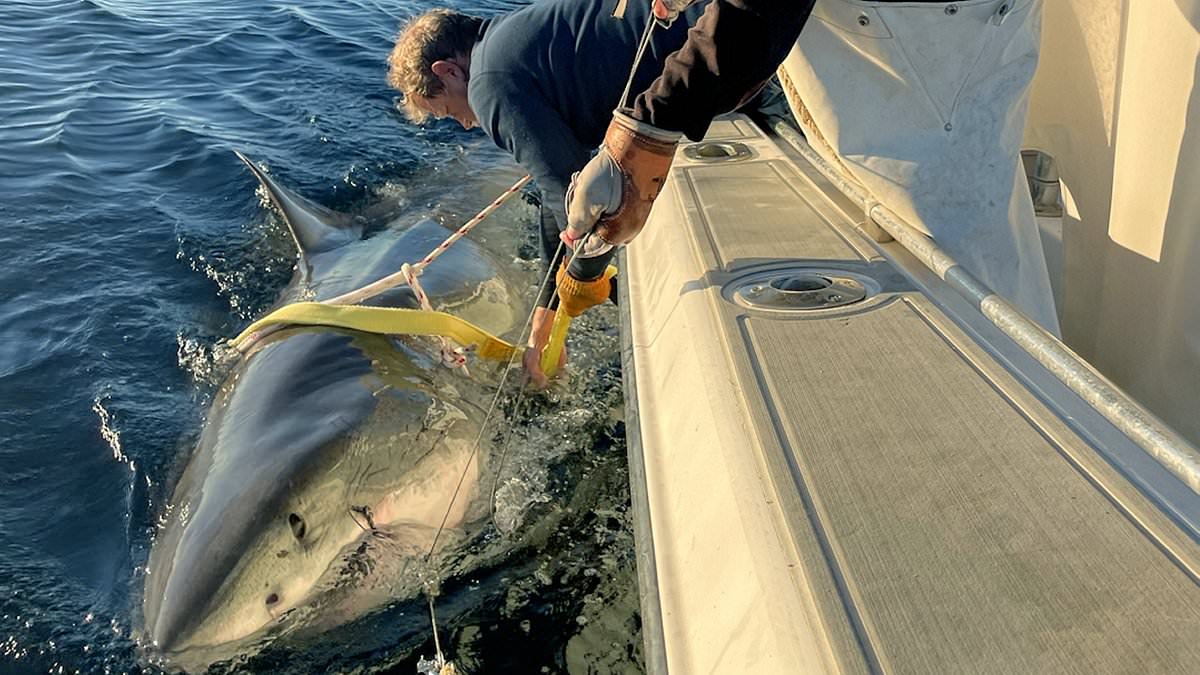
The largest male great white shark ever recorded in the Atlantic has made a dramatic reappearance, traveling thousands of miles from the US East Coast into the colder waters of Canada. Nicknamed ‘Contender,’ the colossal predator measures an impressive 13 feet and nine inches in length and weighs nearly 1,700 pounds.
OCEARCH, a non-profit marine research organization, detected a ping from Contender’s satellite tracker on Wednesday afternoon. The signal originated in the waters between Quebec and Newfoundland and Labrador, near the entrance to the Strait of Belle Isle. This comes after months of radio silence that began in late April when the shark was last tracked near North Carolina.
Marine biologists note that tracking gaps are completely normal. Contender’s satellite tag can only transmit data when his dorsal fin breaks the ocean’s surface, and Wednesday’s signal was a brief ‘Z-ping,’ meaning he only lingered at the surface for a few moments before diving back down.
Contender’s epic journey northward aligns with the natural migration patterns of great white sharks, which typically head to the cooler waters of Atlantic Canada during the summer months to follow prey such as seals. Last year, the giant shark was similarly spotted near the Massachusetts coast before making its way up to the Gulf of St. Lawrence.
Meanwhile, shark activity is seeing an uptick elsewhere in the Northeast. Officials recently reported a cluster of up to nine great white sharks—including juveniles—feeding near popular beaches in Maine, driven by favorable summer temperatures and abundant food sources like harbor seals and baitfish. While authorities remind beachgoers to remain cautious, experts emphasize that these majestic predators are simply following their natural instincts in vital seasonal feeding grounds.